 Harriet Wetton
Walking up to your car on a hot summer afternoon can feel like stepping directly into a baking oven. The steering wheel burns your hands, the seats scorch your legs, and the air inside feels thick and uncomfortable.
Beyond the intense heat, bright glare makes driving tiring for your eyes, and clear glass leaves your personal space on display to everyone on the road.
Installing window film seems like the perfect solution, but figuring out how much to tint car windows quickly becomes confusing. If you pick a percentage that is too dark, you risk getting pulled over, paying expensive traffic fines, or struggling to see safely at night.
If you pick a shade that is too light, you end up wasting your money on something that barely lowers the interior heat or blocks bright sunlight.
Getting the right balance does not have to be stressful. In this detailed guide, you will learn how window tint percentages work, the laws you must follow, the total costs involved, and how to choose the ideal setup for your daily driving needs.
Understanding Window Tint Percentages: What Do the Numbers Mean?
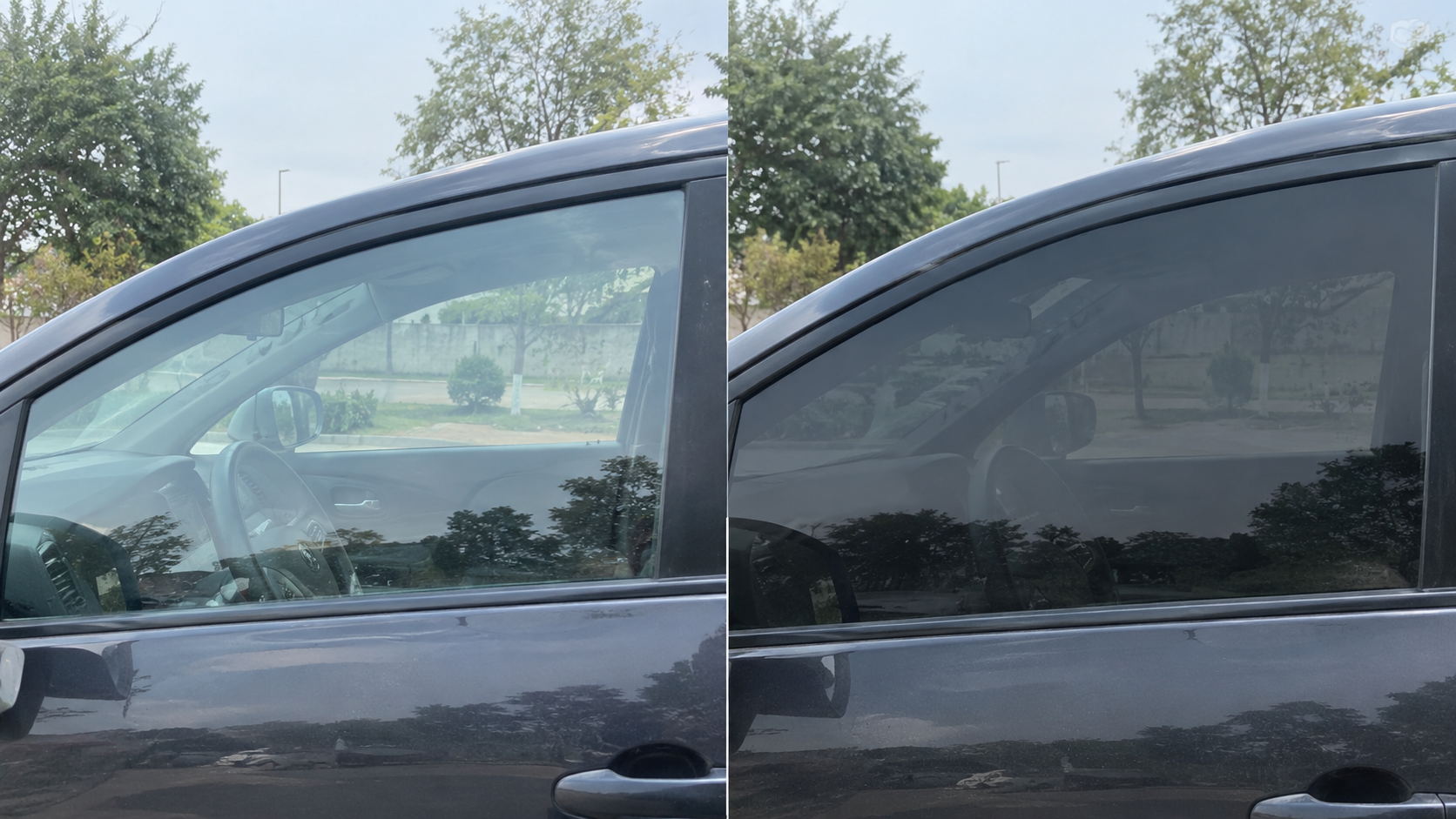
The main factor that determines how dark your windows look is visible light transmission. People in the auto industry usually shorten this term to VLT. VLT measures the percentage of light that can pass directly through your vehicle glass.
Understanding this scale is simple once you know the core rule: a lower percentage means a darker shade, while a higher percentage lets in more light.
| VLT Percentage | Darkness Level | Primary Characteristic |
| 0% VLT | Solid Black | Zero visibility through glass |
| 50% VLT | Medium Shade | Balanced light and heat reduction |
| 100% VLT | Clear Glass | Standard untreated automotive glass |
Here is a clear breakdown of how common shade levels perform on the road:
-
5% VLT (Limo Tint): This is the darkest option available. It blocks 95% of incoming light, making it almost impossible for anyone to look inside. While it gives complete privacy, it severely reduces nighttime visibility and is illegal on front side windows in nearly all locations.
-
20% VLT (Dark Factory Match): This option blocks 80% of light. It provides a sleek, private look and strong glare reduction. Many SUVs and minivans come with 20% dark glass on their rear passenger doors straight from the factory.
-
35% VLT (The Balanced Standard): Blocking 65% of light, this medium tone is the most popular choice for sedans. It gives your vehicle a clean look, reduces eye strain, and lowers interior heat without making nighttime driving unsafe.
-
50% VLT (Subtle Protection): This level blocks half of incoming light. It offers a smooth, light tone that tones down harsh sunlight while keeping the cabin open and easy to see into.
-
70% VLT to 80% VLT (Nearly Clear Shield): These high transmission films block very little visible light. They are usually made from advanced materials like ceramic to block heat and ultraviolet radiation without visibly darkening the glass.
Why Film Material Matters More Than Darkness
Many drivers believe that a darker tint automatically blocks more heat. In the past, with basic dyed films, that was mostly true.
Modern material technology has completely changed how window treatments function. Darkness controls privacy and glare, but the physical material determines how cool your cabin stays.
| Film Material Type | Heat Rejection Level | Glare Control | Expected Lifespan | Best Used For |
| Dyed Film | Low (20% – 30%) | Good | 1 to 3 Years | Budget upgrades and basic appearance |
| Metallic Film | Medium (35% – 45%) | Excellent | 5 to 7 Years | High glare reduction and structural strength |
| Carbon Film | High (40% – 60%) | Great | Lifetime | Matte dark look that never turns purple |
| Ceramic Film | Maximum (70% – 90%+) | Superior | Lifetime | Ultimate heat block without ultra-dark glass |
Dyed options are the most affordable upfront. They absorb light to darken the glass, but they do not reflect infrared heat efficiently. Over time, sunlight breaks down dyed materials, turning them purple and causing ugly surface bubbles.
Carbon options use microscopic carbon particles embedded in the film. They give glass a smooth matte finish, block a solid amount of heat, and never turn purple over time.
Ceramic film is the top choice for performance. It contains non-conductive ceramic particles that block invisible infrared rays, which cause heat.
A light 70% ceramic film can reject more interior heat than a pitch-black 5% dyed film. If your main goal is staying cool in hot weather, investing in quality ceramic material matters far more than picking a dark percentage.
Car Window Tint Laws and Legal Limits
Before booking an appointment or buying film, you must learn your local vehicle lighting and glass standards. Auto glass laws vary widely across different states and countries.
Law enforcement agencies like the National Highway Traffic Safety Administration establish guidelines for road safety, and police officers carry portable digital tint meters that slide over open glass to read exact VLT percentages instantly.
| Window Position | Typical Legal Standard |
| Windshield | AS-1 Line Only (Top 4 to 6 inches) |
| Front Side Windows | Lighter Limit Required (Typically 35% – 50% VLT) |
| Rear Side Windows | Darker Shades Allowed (Typically 20% – 35% VLT) |
| Rear Windshield | Darker Shades Allowed (With Dual Side Mirrors) |
Windshield Regulations
In almost every region, putting dark film across your main windshield is strictly illegal. Most jurisdictions only allow a dark strip along the top edge of the windshield down to the manufacturer AS-1 line (usually the top 4 to 6 inches).
Some regions allow clear 70% or 80% medical heat-shield films across the full windshield, but you often need a certified doctor note for medical exemptions like light sensitivity or skin conditions.
Front Side Windows
Front driver and passenger side windows have the strictest lighting rules because officers need to see inside during roadside stops, and drivers need clear side view mirror visibility at night.
Many regions require front glass to stay at 35% VLT or lighter, while some areas ban any aftermarket darkness on front windows entirely.
Rear Side and Back Windows
Rules are usually much looser for rear passenger doors and the rear window glass. Because these sections do not block the driver primary viewing angles, many places allow dark 20% or even 5% film, provided the vehicle has working left and right side view mirrors.
Step-by-Step Guide: How to Choose the Right Shade
Picking your ideal shade involves balancing personal driving habits, daily vehicle storage, local law enforcement strictness, and aesthetic taste. Follow this simple process to narrow down your choices:
-
Check Local VLT Statutes: Look up your specific area department of motor vehicles website to find the exact numerical limit for every window position.
-
Define Your Primary Goal: Determine if you want heat reduction, glare reduction, dark privacy, or a sharp visual appearance.
-
Factor in Night Driving Conditions: If you regularly drive on dark rural roads without streetlights or have weaker night vision, avoid going darker than 35% on any glass used for driving checks.
-
Evaluate Vehicle Interior Color: A light interior (tan or grey cloth/leather) reflects light out, making dark glass look lighter from the outside. A black leather interior makes even light 50% shades look significantly darker.
-
Select the Material First, Then the Shade: Decide on dyed, carbon, or ceramic construction based on your long-term ownership plans, then select your legal VLT percentage.
Real Life Driving Scenarios
To help you picture how different choices perform, consider these real driving setups:
Scenario A: The Daily Suburban Commuter
Mia drives 45 minutes to work every morning with the rising sun hitting her face, then drives home facing the setting sun. Her city allows 35% VLT on all side and rear windows. She chooses a 35% Ceramic Film all around, plus a 5% glare strip on the top of her windshield.
The Result: Her car stays much cooler while parked at work, glare no longer causes eye fatigue on the highway, and she has full visibility when reversing into her driveway at night.
Scenario B: The Family SUV in Hot Climates
Marcus lives in a sunny southern region and drives a large SUV carrying young children in the back seats. The rear doors already came with dark privacy glass from the factory, but his kids still complain about interior heat.
He installs 70% clear ceramic film over the rear factory glass to block infrared rays, and adds a legal 30% ceramic film on the front side windows.
The Result: The cabin temperature drops drastically, glare on rear iPad screens disappears, and the vehicle maintains a clean, uniform look without breaking traffic laws.
Common Window Tinting Mistakes to Avoid
Installing window film seems straightforward, but simple mistakes can cost you hundreds of dollars in removal fees and replacement costs. Watch out for these frequent errors:
-
Ignoring Factory Glass Inherent Shade: Clear automotive glass is rarely 100% clear. Most standard factory car glass measures between 70% and 85% VLT right out of the factory. If your local law limits you to 35% VLT and you apply a 35% film onto 75% factory glass, the combined reading will be roughly 26% VLT, making your car illegal.
-
Choosing Price Over Material Quality: Bargain shop quotes under $100 usually rely on cheap dyed film. Within two seasons, UV light breaks down the glue, causing purple discoloration, bubbling, and blurred vision through the rear glass.
-
Rolling Down Windows Too Soon: After installation, moisture remains trapped between the film and the glass. Rolling down your windows before the adhesive cures completely (usually 3 to 5 days depending on warm sunlight) will peel the edges and ruin the job.
-
Using Ammonia-Based Glass Cleaners: Ammonia degrades window film coatings over time, making them hazy. Always use gentle, alcohol-free, tint-safe glass cleaners with soft microfiber towels.
How Much Does Window Tinting Cost?
Pricing varies based on your vehicle size, window count, glass curvature, and film type. Below is a realistic price outline for standard passenger vehicles:
| Service / Film Type | Average Price Range |
| Basic Dyed Film (Full Sedan) | $120 – $200 |
| Mid-Grade Carbon Film (Full Sedan) | $200 – $350 |
| Premium Ceramic Film (Full Sedan) | $350 – $600+ |
| Windshield Heat Strip (Top Edge) | $40 – $80 |
| Full Windshield (Ceramic Clear) | $150 – $300 |
| Old Film Removal Labor | $100 – $200 |
While high-end ceramic options require a larger investment upfront, they pay off by keeping your interior cool, reducing air conditioning fuel strain, and lasting the lifetime of your vehicle without fading or peeling.
Related Subtopics and Car Care Knowledge
When improving your vehicle comfort and long-term value, window shade level is only one piece of the puzzle. Understanding broader car maintenance standards helps protect your automotive investment over time.
For example, learning about dark film law details and legal shade limits keeps you safe from costly equipment violation tickets.
If you love DIY projects, studying DIY window tint installation steps versus professional shop techniques helps you decide whether to attempt the job at home or trust an experienced technician.
Similarly, keeping up with summer interior car cooling hacks ensures your vehicle stays comfortable during intense heatwaves.
Keeping your vehicle in top condition goes beyond interior comfort. Checking your routine vehicle maintenance checklists and finding reputable auto detailing near me services keeps your car running smoothly and looking brand new for years.
When to Hire a Professional vs. DIY Installation
Attempting a DIY pre-cut tint kit can save money, but auto glass has complex compound curves that require precise heat shrinking.
| Installation Factor | DIY Installation | Professional Shop |
| Upfront Cost | Low material kit cost | Higher labor investment |
| Working Environment | Risk of dust, lint, and wind | Controlled dust-free bay |
| Fitting Quality | Risk of bubbles and creases | Precise heat-shrink fitting |
| Warranty | No warranty protection | Lifetime replacement warranty |
| Legal Compliance | Self-measured compliance | Guaranteed local legal standards |
If you have a modest budget, simple flat side windows, and plenty of patience, a DIY pre-cut kit can work. However, if your car has curved rear glass, tight window gaskets, or you want a flawless finish backed by a lifetime replacement warranty against bubbling and peeling, hiring a certified professional installer is worth every penny.
Future Shifts in Auto Glass Technology
Automotive window treatments are evolving rapidly alongside electric vehicles and smart glass innovations.
-
Smart Electrochromic Glass: Modern luxury cars are adopting dynamic glass that changes from clear to dark with the push of a button or automatically adjusts based on direct sunlight.
-
High-Efficiency Thermal Shields: As electric vehicles focus on range efficiency, advanced nanoscale window films are becoming standard equipment to lower cabin heat and reduce battery usage from air conditioning.
-
Photowritable and Solar Films: Researchers are working on clear window coatings that block heat while harvesting solar energy to trickle-charge vehicle electronics while parked outdoors.
Summary and Next Steps
Choosing how much to tint your car windows comes down to balancing style, comfort, legal safety, and budget.
For most daily drivers, a 35% VLT ceramic film offers the ideal sweet spot: it delivers exceptional heat and glare reduction, keeps your car legal in many locations, looks stylish, and keeps nighttime visibility safe and clear.
Before booking your appointment, take five minutes to check your local state or city VLT percentages, decide on the material that fits your ownership timeline, and choose an installer that provides clear warranty terms. Taking these simple steps ensures you enjoy a cooler, more private, and comfortable ride every time you get behind the wheel.
Frequently Asked Questions
What is the most common window tint percentage?
35% VLT is the most common shade worldwide. It balances glare reduction, sleek style, and interior privacy while maintaining safe visibility for nighttime driving and meeting legal limits in many regions.
Can you drive safely at night with 20% tint?
While many drivers use 20% shade on rear windows without issues, putting 20% on front side windows makes nighttime driving difficult, especially in dark unlit areas or during rainstorms.
Does car window tinting go on the inside or outside?
Window film is cut and heat-shaped on the outside of the glass, but the final installation adhesive is always applied to the inside surface of the window to protect it from weather and wind wear.
How long does window tint take to dry completely?
In warm, sunny weather, film cures in about 3 to 5 days. In cold or humid conditions, the curing process can take up to 2 to 3 weeks. You may see small water pockets or a haze during this drying time, which is completely normal.
Will window tint prevent my leather seats from cracking?
Yes. Quality window films block up to 99% of harmful ultraviolet (UV) rays, which are the main cause of leather drying, cracking, and dashboard color fading over time.