
 Harriet Wetton
Imagine walking into your bathroom after a long, exhausting day. You flush the toilet or turn on the bathroom sink, and suddenly you hear a low, gurgling sound coming from the toilet bowl. Air bubbles rise to the water surface, burping like a tiny swamp monster hidden inside your pipes.
If your toilet is bubbling, you might feel confused and frustrated. Is your toilet about to overflow? Is there a costly plumbing disaster brewing under your floors? Will you need to spend hundreds of dollars on emergency repairs?
Take a deep breath. A bubbling toilet is a common household issue. It is your plumbing system sending a clear distress signal. Something is blocking the smooth flow of water and air in your pipes.
This guide breaks down everything you need to know about a bubbling toilet. You will learn how your plumbing system works, why bubbles form, how to fix the problem using simple tools, and when to call a professional plumber.
What Does a Bubbling Toilet Mean?
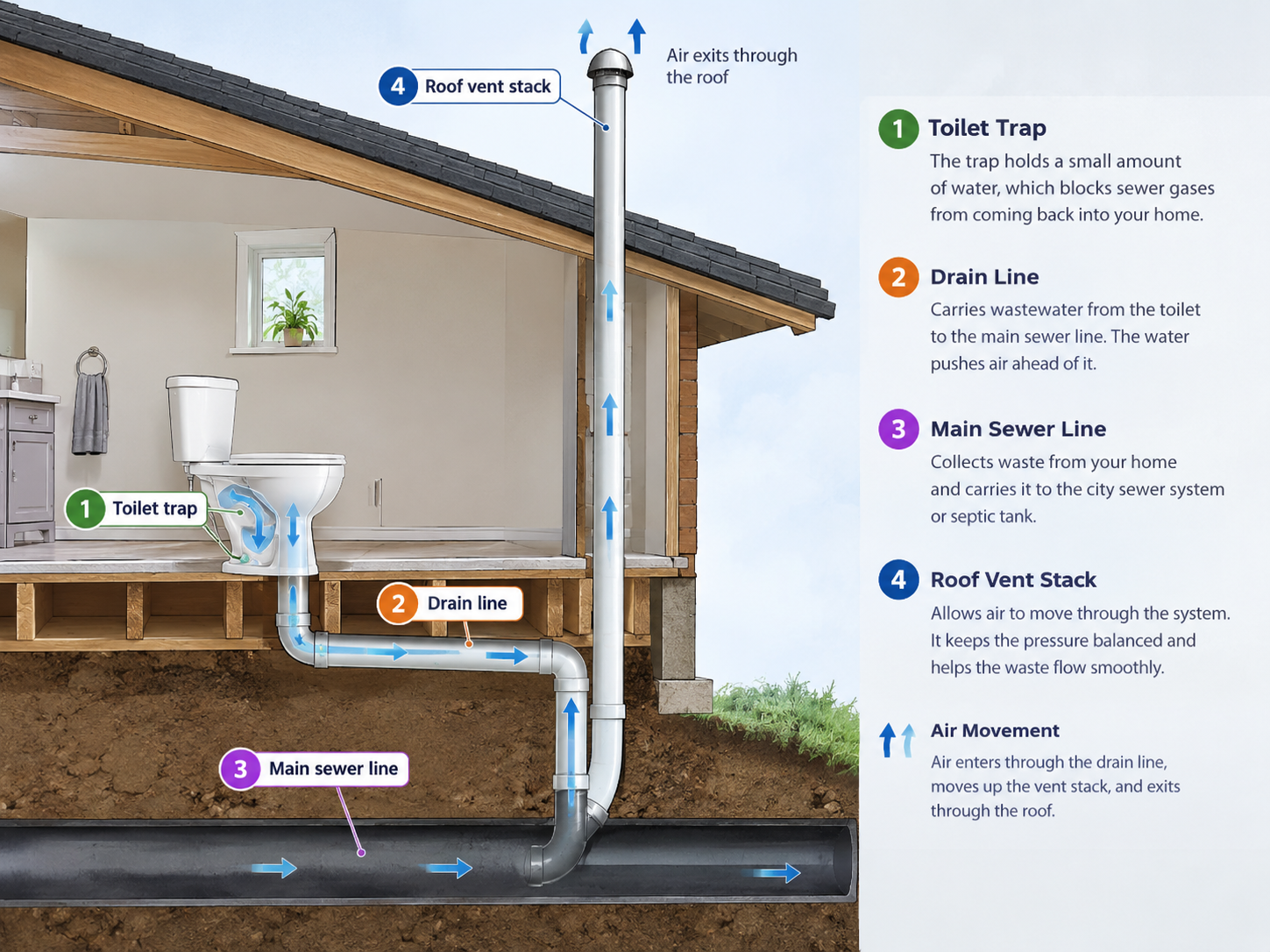
A bubbling or gurgling toilet happens when air gets trapped inside your drainage pipes. Instead of flowing smoothly out through your home vent stack, trapped air pushes backward through the water trap in your toilet bowl.
Your plumbing system needs two main things to move wastewater away from your home:
-
Water to wash waste down the drain line
-
Air to balance pressure and allow smooth water movement
When air cannot move freely through the vent pipes, negative pressure builds up inside the system. Water flowing down one pipe pulls or pushes air from another nearby opening.
The toilet bowl is usually the lowest and easiest opening for trapped air to escape, creating visible bubbles and a distinct gurgling sound.
Why Is Air Trapped in Your Plumbing System?
To understand why your toilet bubbles, think about how a straw works. If you place a finger over the top of a straw filled with liquid, the liquid stays inside. Air cannot get in from the top, so water cannot fall out from the bottom.
Your home plumbing operates on a similar principle. If a pipe is clogged or a roof vent is blocked, air pressure becomes unbalanced. As water tries to move through the pipe, it creates a vacuum. The system struggles to suck air from anywhere it can find it.
Air rushes through the standing water in your toilet bowl, creating bubbles and gurgling noises.
What Are the Main Causes of a Bubbling Toilet?
Several different issues can cause your toilet to bubble or gurgle. Some problems are small and easy to fix yourself. Others require specialist equipment or main line cleaning.
| Cause Category | Common Triggers | Severity Level |
| Local Clogs | Toilet trap blockages, excess toilet paper, local drain obstructions | Low to Moderate |
| Vent Stack Blockages | Leaves, twigs, bird nests, ice buildup in roof vent | Moderate |
| Main Line Clogs | Tree root intrusions, collapsed pipes, heavy waste buildup | High |
| Municipal & Septic Issues | City sewer main pressure, full septic tank backflow | High to Critical |
1. A Local Clog in the Toilet Trap or Drain Line
The most common reason for a bubbling toilet is a localized clog in the toilet trap or the immediate drain line.
-
Toilet Trap Clogs: The S-shaped or P-shaped pipe built into the base of your toilet holds water to block sewer gases from entering your home. Excess toilet paper, sanitary products, or heavy waste can get stuck in this bend.
-
Drain Line Clogs: The pipe connecting your toilet to the main house drain can collect debris over time, narrowing the pathway for air and water.
2. A Blocked Plumbing Vent Stack
Your plumbing system has vent pipes that extend up through your roof. These roof vents allow air into the drain pipes so water can flow out smoothly, much like opening a vent hole on a gasoline can.
When roof vents become clogged by leaves, bird nests, ice, or small debris, air pressure cannot equalize. Air is forced down through the pipes and escapes out through your toilet bowl.
3. A Main Sewer Line Blockage
Your home drain pipes connect to a single main sewer line that carries wastewater to the municipal sewer system or a private septic tank.
If the main line develops a heavy clog, water and air from other fixtures in your home (like your shower, bathtub, or washing machine) have nowhere to go.
When you drain a tub or run the washing machine, trapped air travels up through the lowest point in your plumbing, which is often the toilet bowl.
4. Tree Root Intrusions
Tree roots naturally grow toward underground moisture sources. Old sewer pipes made of clay, cast iron, or cracked PVC can develop tiny cracks over time. Tree roots penetrate these cracks, feeding on the nutrient-rich wastewater inside.
As tree roots grow larger inside the pipe, they trap toilet paper, grease, and solid waste. This creates severe pressure problems and leads to persistent toilet bubbling.
5. Problems with the Municipal Sewer Line
Sometimes the issue originates outside your property lines. Heavy rainfall, main line breaks, or sewer maintenance work by your city can create backpressure in the main street line. This pressure travels back into residential service lines, causing toilets to bubble and gurgle.
How to Diagnose a Bubbling Toilet Step-by-Step
Diagnosing the exact location of the problem saves time and prevents unnecessary repairs. Follow these simple steps to find out where the air pressure issue is coming from.
| Diagnosis Step | Action to Take | Expected Outcome / Meaning |
| Step 1: Toilet Flush | Flush the toilet and observe bowl water level | High water level and bubbles indicate a local trap clog |
| Step 2: Sink & Shower Test | Run nearby bathroom sink or shower for 2 minutes | Bubbling during run indicates a shared line clog or blocked roof vent |
| Step 3: Appliance Drain Test | Run washing machine or drain a full bathtub | Bubbling during heavy drain indicates a main sewer line or septic issue |
| Step 4: Roof Vent Inspection | Inspect roof vent stack opening safely | Visible leaves, nests, or ice indicate a venting blockage |
Step 1: Flush the Toilet and Observe
Flush the toilet while watching the bowl closely. Does the water level rise high before dropping slowly? Do bubbles appear immediately when you push the flush handle down?
-
High water level and bubbles: Indicates a clog near the toilet bowl or in the immediate drain line.
Step 2: Run Nearby Sinks and Showers
Turn on the bathroom sink faucet or run the shower for two minutes. Watch the toilet bowl while the water runs down the drain.
-
Bubbles appear while running the sink or shower: Indicates a shared drain line clog or a blocked roof vent stack.
Step 3: Check Other Water Appliances
Run your home washing machine through a fill-and-drain cycle or run a full bathtub.
-
Toilet bubbles when large amounts of water drain elsewhere: Indicates a main sewer line blockage or a septic tank filling up.
Step 4: Check the Roof Vent
If you can safely access your roof, inspect the plumbing vent stack opening. Look for visible leaves, twigs, bird nests, or debris blocking the top of the pipe.
Real-Life Example: The Case of the Mystery Gurgle
Consider a practical example from an everyday household setup.
The Situation: David and Elena noticed their guest bathroom toilet made a bubbling sound every time their washing machine drained water during the spin cycle.
At first, they ignored it, thinking it was just a quirky noise. Two weeks later, the guest toilet bubbled aggressively, and dirty water backed up into the master shower floor.
The Diagnosis: A licensed plumber ran a camera down the sewer line. The main vent stack on the roof was completely blocked by a bird’s nest.
Air had no escape route during heavy water drainage from the washing machine. The system pulled air through the nearest open fixture, which was the guest toilet bowl.
The Solution: Clearing the bird’s nest from the roof pipe and clearing a minor buildup in the main line completely resolved the issue in under two hours.
Common Mistakes to Avoid When Fixing a Bubbling Toilet
When dealing with a bubbling toilet, taking the wrong action can damage your plumbing system or make the clog worse. Avoid these four common mistakes:
| Mistake | Why It Harms Your Plumbing | Better Alternative |
| 1. Chemical Cleaners | Generates intense heat that cracks porcelain and ruins rubber seals | Use a flange plunger or mechanical toilet auger |
| 2. Repeated Flushing | Overflows bowl water, causing property damage and health hazards | Stop flushing immediately if water level rises abnormally |
| 3. Ignoring Bubbles | Turns minor pressure issues into major sewage backups | Address gurgling sounds early before pipes clog completely |
| 4. Flat Sink Plungers | Fails to create an airtight seal inside curved toilet drains | Use a dedicated toilet flange plunger |
1. Pouring Chemical Drain Cleaners Down the Toilet
Never use harsh liquid chemical drain cleaners in a toilet. Chemical drain cleaners generate heat through chemical reactions. This intense heat can warp or crack the porcelain of your toilet bowl, melt plastic drain pipes, or destroy the rubber wax ring seal beneath the toilet base.
2. Repeatedly Flushing a Bubbling Toilet
If your toilet bubbles and the water level rises without draining properly, do not keep flushing. Continuous flushing will cause contaminated water to overflow onto your bathroom floor, creating property damage and health hazards.
3. Ignoring the Problem
A bubbling toilet is an early warning system. Ignoring small air bubbles usually leads to total pipe blockages, raw sewage backups, and costly water damage repairs later on.
4. Using the Wrong Type of Plunger
A standard flat red cup plunger is designed for flat sink drains, not curved toilet bowls. Using a flat plunger inside a toilet bowl will not create the air seal needed to clear a stubborn obstruction.
How to Fix a Bubbling Toilet: Practical Methods
Here are simple, safe, and effective techniques you can try at home to resolve a bubbling toilet.
Method 1: Use a Toilet Flange Plunger
A flange plunger has an extended fold-out rubber flap at the bottom designed to seal tightly inside the curved opening of a toilet drain.
-
Prepare the plunger: Ensure the extended rubber flange flap is pulled out from the cup.
-
Form a tight seal: Insert the plunger into the toilet bowl at an angle. Cover the entire drain hole so no water or air escapes around the edges of the plunger.
-
Plunge with correct motion: Push down gently on the first stroke to push air out of the cup without splashing water. Then push down and pull up firmly and rapidly for 15 to 20 seconds.
-
Break the seal: Pull the plunger away quickly to disrupt the clog. If the water drains down rapidly, flush the toilet to check if the bubbling stops.
Method 2: Use a Toilet Auger (Snake)
If plunging does not resolve the issue, a toilet auger (also called a closet auger) can reach deeper into the trap and drain line.
-
Pull the auger handle up so the metal cable retracts inside the protective plastic sleeve.
-
Insert the curved rubber-coated end of the auger into the toilet bowl drain opening. The rubber guard protects porcelain from scratching.
-
Rotate the crank handle clockwise while pushing downward to feed the metal cable deeper into the toilet trap.
-
When you feel resistance, continue cranking to break up the clog or hook onto foreign objects.
-
Carefully pull the cable back out, remove any retrieved debris, and test flush the toilet.
Method 3: Clear the Roof Vent Stack
If your toilet bubbles when running other water fixtures, the roof vent stack may be blocked.
-
Safely access your roof using a sturdy extension ladder.
-
Locate the vertical PVC or cast iron pipe standing above your roofline directly over the bathroom area.
-
Use a flashlight to inspect inside the top of the pipe.
-
Remove visible leaves, sticks, or debris using a plumber’s snake or hand tools.
-
Insert a garden hose into the vent stack and have someone on the ground turn on the water briefly. A clear vent will allow water to flow freely down through the house drains without overflowing at the roof pipe opening.
When to Call a Professional Plumber
While small clogs can be cleared with a plunger or auger, certain situations require professional equipment and training.
-
Multiple Gurgling Fixtures: Bubbles appear in multiple toilets, bathtubs, or sinks simultaneously.
-
Sewage Backups: Dirty water or sewage backs up into shower drains or bathtubs when flushing.
-
Foul Odors: Persistent sewer gas odors enter your living space from household drains.
-
Failed DIY Attempts: Plunging and augering fail to stop the gurgling noises or restore proper flow.
-
Appliance Drainage Backpressure: Water surges backward whenever heavy appliances like washing machines drain.
Professional plumbers use high-definition drain camera inspection tools to look deep inside your pipes without digging up your yard. They can identify cracked pipes, tree root infestations, broken main lines, or collapsed sewer pipes quickly.
To maintain your home properly, follow the official guidelines provided by the U.S. Environmental Protection Agency (EPA) on Home Septic and Drain Care. You can also explore practical life skills and household maintenance guides on willingtodo.com.
Advanced Plumbing Solutions
When basic fixes fail, professional plumbers rely on advanced techniques to fix stubborn sewer issues.
1. Hydro Jetting
Hydro jetting uses ultra-high-pressure water streams (up to 4,000 PSI) injected into drain lines through a specialized nozzle.
This powerful water force blasts away accumulated grease, mineral deposits, sludge, and tree roots from pipe walls without using harmful chemicals.
2. Sewer Line Video Camera Inspections
Plumbers insert a flexible rod with a waterproof micro-camera down your cleanout pipe. Real-time video footage allows technicians to locate exact blockage points, pipe cracks, or structural failures beneath concrete slabs or lawns.
3. Trenchless Sewer Line Repair
If a main sewer pipe is damaged or cracked by tree roots, modern plumbers use trenchless technology to repair pipes. They insert an epoxy-lined fiberglass tube into the existing pipe and inflate it.
The epoxy cures in place, forming a brand-new, seamless pipe inside the old damaged pipe without digging large trenches across your lawn.
How to Prevent Future Toilet Bubbling
Preventing pipe blockages is much easier and cheaper than fixing major sewer backups. Follow these simple rules to keep your plumbing system running smoothly:
| Best Practices (DOs) | Practices to Avoid (DON’Ts) |
| Flush only human waste and toilet paper | Flush “flushable” wipes, paper towels, or sanitary products |
| Inspect roof vent stacks annually for debris | Pour grease, fats, or cooking oils down kitchen sinks |
| Keep deep-root trees trimmed near sewer main lines | Use harsh chemical drain cleaners in toilets |
| Schedule regular professional plumbing inspections | Ignore minor gurgling or slow-draining water |
-
Flush only the “Two Ps”: Human waste and toilet paper are the only items that should ever be flushed down a toilet.
-
Avoid “flushable” wipes: Moist wipes do not dissolve quickly in water like standard toilet paper. They bind together with hair and grease in main lines, creating severe blockages.
-
Keep tree roots managed: Plant large trees and deep-root bushes far away from underground sewer line paths.
-
Schedule yearly plumbing maintenance: Have a professional inspect your main cleanout and roof vents once a year to catch minor buildup before it becomes an emergency.
Frequently Asked Questions
Why is my toilet bubbling when I run the bathroom sink?
Your toilet and sink share a common drain pipe and vent stack. If there is a clog in the shared drain line or if the roof vent is blocked, air gets pushed back up through the lowest opening, which is your toilet bowl.
Can a bubbling toilet fix itself?
No, a bubbling toilet will not fix itself. While air bubbles may come and go temporarily as water moves through pipes, the underlying airflow obstruction or drain clog remains inside the system and will likely get worse over time.
Is a bubbling toilet dangerous?
A bubbling toilet is not an immediate physical danger, but it indicates trapped air pressure or a growing blockage. Left untreated, it can cause raw sewage to back up into your home, causing property damage and health hazards.
What is the difference between a toilet gurgling and bubbling?
Toilet gurgling refers to the sound made when trapped air bubbles push through standing water in the bowl. Both terms describe the exact same underlying issue: trapped air escaping through your plumbing system due to a blockage or pressure imbalance.
Will flushing hot water fix a bubbling toilet?
Flushing warm water can help melt small soap or fat build-ups in sink drains, but it will not resolve trapped air pressure caused by blocked roof vents, main line tree root invasions, or heavy pipe clogs.