
 Harriet Wetton

You can safely use a straw at least 7 to 10 days after wisdom teeth removal. For complex, impacted extractions or slow healing, waiting up to 14 days is the safest choice.
Using a straw too soon creates negative pressure in your mouth that can pull the critical blood clot out of your healing socket, causing a excruciatingly painful condition called dry socket.
Having your wisdom teeth removed is a rite of passage for millions of people every year. After the procedure, you are likely dealing with a sore jaw, swollen cheeks, and an overwhelming craving for something cold and smooth.
A thick berry smoothie or an iced milk tea sounds like heaven right now. You reach for a straw, but then you remember the stern warning your oral surgeon gave you right before you went under: do not use a straw.
In this comprehensive guide, we will walk you through the exact recovery timeline, the hidden science of oral healing, how to drink safely without ruining your recovery, and real strategies to get back to your normal routine without pain or panic.
Why Is Using a Straw After Wisdom Teeth Removal So Dangerous?
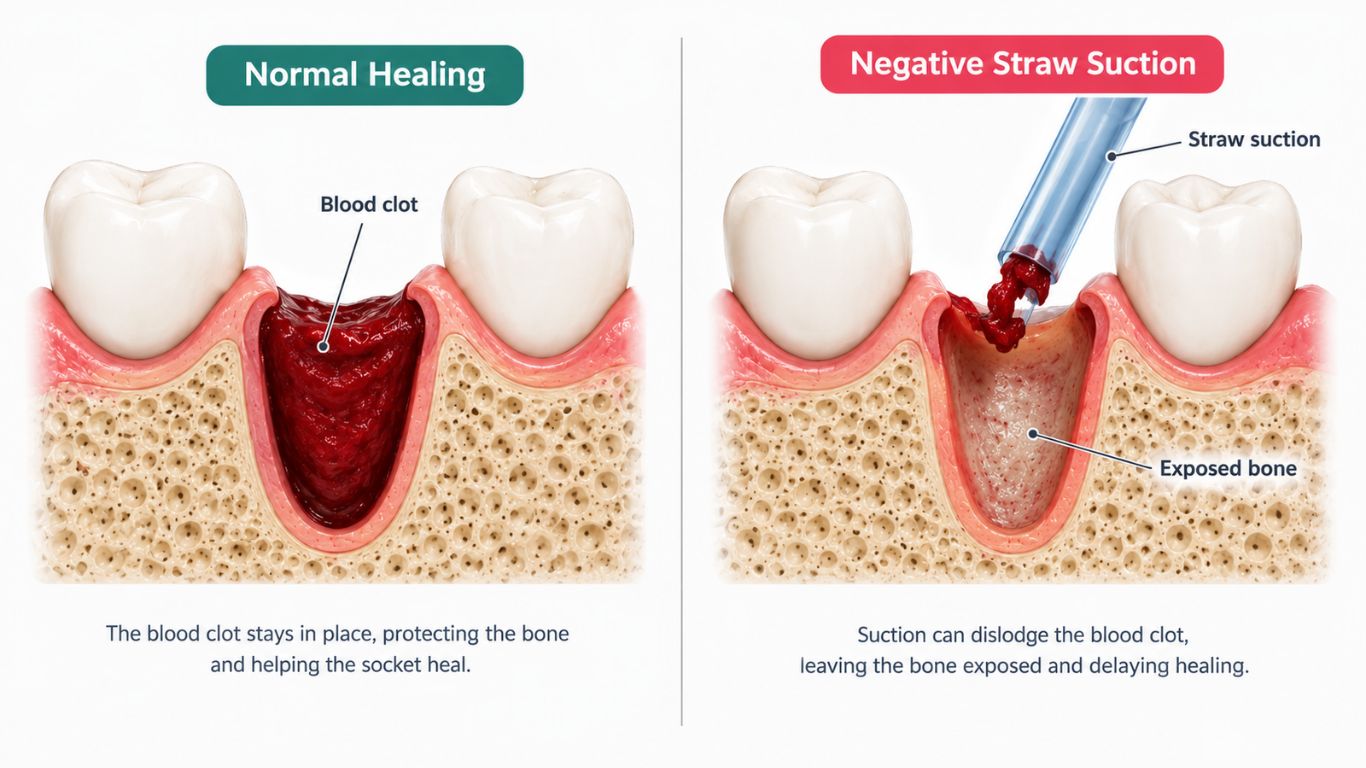
To understand why a simple plastic straw poses such a massive threat to your mouth, you need to understand what happens inside your jaw immediately after a tooth is pulled.
When an oral surgeon removes a wisdom tooth, it leaves an open hole in your bone and gum tissue. Your body instantly goes to work to heal this wound. Within minutes, blood fills the socket and forms a dark red gelatinous plug called a blood clot.
This blood clot acts as a natural biological bandage. According to medical guidance from the Mayo Clinic, this blood clot protects exposed nerve endings and bare jawbone from air, food particles, and bacteria while new tissue forms.
The Physics of Suction
When you sip a drink through a straw, you create a sealed vacuum inside your mouth. To pull liquid upward against gravity, your cheek muscles compress, your tongue drops, and internal air pressure drops significantly.
That sudden drop in pressure generates a pulling force inside your mouth. Because your healing socket is fresh, that negative pressure acts like a plunger on the fragile blood clot.
-
The clot is dislodged or suctioned completely out of the socket.
-
Bare, sensitive jawbone and nerve endings become completely exposed.
-
Air, bacteria, and food debris make direct contact with the bone.
This painful scenario is known as alveolar osteitis, or dry socket.
What Is Dry Socket and Why Does It Hurt So Much?
Dry socket is by far the most common and uncomfortable complication following a wisdom tooth extraction. While standard surgical soreness improves day by day, dry socket pain usually strikes out of nowhere between day 1 and day 5 after surgery.
When the protective clot disappears, the nerve endings deep within your jawbone are left raw and defenseless. The pain is not just a mild ache; it is often described as a deep, radiating throbbing sensation that shoots up along your jaw, into your ear, eye, and temple on the affected side of your face.
Key Symptoms of Dry Socket
-
Severe, Throbbing Pain: Intense pain that over-the-counter painkillers barely touch.
-
Visible Empty Socket: Looking in the mirror, the socket appears empty or shows whitish bare bone instead of a dark clot.
-
Bad Breath and Foul Taste: A noticeable, unpleasant taste in your mouth and persistent bad breath caused by food debris and tissue irritation.
-
Radiating Discomfort: Pain that spreads outward from the extraction site toward your ear, temple, or neck.
Treating dry socket requires a trip back to your dentist or oral surgeon. They must clean out the socket and place a medicated dressing inside to calm the irritated nerves. Preventing it in the first place by avoiding straws is vastly easier than treating it after it happens.
Day-by-Day Oral Healing Timeline
Every person heals at a slightly different pace, but your mouth follows a strict physiological sequence after a tooth extraction. Knowing what is happening under your gums day by day makes it much easier to stay patient.
| Timeline | What Is Happening Inside | Can I Use a Straw? |
| Days 1 to 3 | Clot forms; peak swelling and soreness | Absolutely NO |
| Days 4 to 7 | Granulation tissue forms over raw socket | High risk; avoid straws |
| Days 8 to 10 | Clot converts to soft tissue | Safe for most simple cases |
| Days 11 to 14 | Gums close over the socket surface | Fully safe to resume straws |
Days 1 to 3: The Critical Window
During the first 72 hours, your body focuses on stopping bleeding and establishing the initial blood clot. Swelling, mild oozing, and jaw stiffness reach their peak during this window.
-
Straw Safety Status: Strictly Forbidden.
-
Primary Goal: Protect the fresh clot at all costs.
-
Key Actions: Rest, apply ice packs to your cheeks, eat smooth room-temperature foods with a spoon, and refrain from blowing your nose, smoking, or spitting.
Days 4 to 7: The Vulnerable Transition
By day 4, your body begins replacing the fragile blood clot with delicate mesh tissue called granulation tissue. Although the wound is becoming stronger, negative pressure can still pull this young tissue away from the underlying bone.
-
Straw Safety Status: High Risk.
-
Primary Goal: Avoid any habits that create oral suction.
-
Key Actions: Continue drinking directly from an open cup, gently rinse with warm salt water after meals, and stick to soft, non-chewy foods.
Days 8 to 10: The Turning Point
For simple extractions where wisdom teeth were fully erupted through the gums, the socket is usually well-protected by day 8 or 9. The risk of dry socket drops dramatically after day 7.
-
Straw Safety Status: Generally Safe (for simple extractions).
-
Primary Goal: Reintroduce normal drinking habits slowly.
-
Key Actions: If you feel no lingering pain or throbbing, you can try drinking thin liquids (like water or tea) through a wide straw using minimal suction. If you feel pulling or discomfort, stop immediately.
Days 11 to 14: Full Soft-Tissue Recovery
By the second week, thick gum tissue has successfully grown over the top of the extraction sockets. While the deeper bone beneath will continue remineralizing for several months, the surface wound is fully closed against suction forces.
-
Straw Safety Status: Safe.
-
Primary Goal: Return to normal drinking and mild chewing routines.
-
Key Actions: Enjoy your favorite smoothies, shakes, and iced drinks through a straw without fear of dry socket.
Other Everyday Habits That Create Dangerous Suction
Straws get most of the attention after wisdom teeth removal, but any action that creates negative pressure inside your mouth can pull out your blood clot. If you strictly avoid straws but engage in these other common activities, you face the exact same risk of dry socket.
1. Smoking and Vaping
Smoking cigarettes or using electronic vaping devices is double trouble for surgical recovery. The mechanical suction required to drag on a cigarette or vape pen exerts strong negative pressure on your healing gums. At the same time, nicotine restricts blood vessels, reducing vital blood flow and oxygen to the wound.
-
Safety Window: Refrain from smoking or vaping for at least 7 full days after surgery.
2. Spitting Forcefully
It is natural to feel extra saliva or a faint taste of blood in your mouth during the first 48 hours. Your natural reaction might be to lean over the sink and spit forcefully. However, the purse-lipped action of spitting creates immediate negative pressure inside your cheeks.
-
Safe Alternative: Gently wipe excess saliva with a clean tissue, or tilt your head over a sink and let the liquid fall out naturally without active spitting.
3. Rinsing Your Mouth Too Vigorously
Good oral hygiene is vital to prevent post-surgical infection, but aggressive swishing with mouthwash or water can wash the clot right out of its socket.
-
Safe Alternative: Starting 24 hours after surgery, use a warm salt water rinse (half a teaspoon of salt dissolved in 8 ounces of warm water). Swish by gently tilting your head from side to side, then open your mouth over the sink and let the water drop out smoothly.
4. Playing Wind Instruments or Whistling
Playing brass or woodwind instruments (like the trumpet, flute, or saxophone) or whistling loudly requires high oral pressure and muscle strain around your jaw.
-
Safety Window: Wait 10 to 14 days before resuming wind instrument practice.
Safe Ways to Drink and Eat During Your Recovery
Staying hydrated and nourished is essential for fast tissue repair, but how do you consume liquids comfortably when you cannot use a straw?
How to Drink Comfortably Without Suction
-
Drink Directly From an Open Glass: Take small, gentle sips from a wide-rimmed cup. Tilt your head back slightly so gravity helps the liquid move toward the back of your throat without needing to suck.
-
Use a Small Spoon: For thicker beverages like smoothies, protein shakes, or milkshakes, use a teaspoon or soup spoon. Eating your smoothie like ice cream eliminates suction entirely while still allowing you to enjoy your favorite cold treats.
-
Try a Squeeze Bottle (With Care): If drinking from a cup causes dribbling due to lip numbness, you can use a soft squeeze bottle. Gently squirt water directly onto your tongue toward the middle of your mouth—never point the stream directly at your extraction sites.
Nourishing Foods for Each Healing Phase
To help you recover without stressing your jaw, here is a quick guide to soft, high-nutrient meals.
| Phase | Recommended Foods | Foods to Avoid |
| Phase 1 (Days 1 to 3) | Smooth yogurt, applesauce, broths, blended soups, ice cream, pudding | Spicy soups, hot liquids, seeds, nuts, thick sticky foods |
| Phase 2 (Days 4 to 7) | Mashed potatoes, scrambled eggs, oatmeal, soft avocados, cottage cheese, well-cooked pasta | Crunchy chips, chewy bread, small rice grains that slip into sockets |
| Phase 3 (Days 8 to 14) | Tender chicken, soft vegetables, pancakes, soft fish, ripe bananas | Hard nuts, popcorn, extremely crunchy snacks |
Taking care of your overall oral health is just as critical before surgery as it is during recovery. Understanding the long-term health of your third molars helps you plan your recovery with confidence.
If you are still weighing whether surgery is necessary for your specific situation, review this guide on whether you have to remove your wisdom teeth to understand your options and expectations.
Real-Life Recovery Scenario: What Normal Healing Looks Like
To give you a clearer picture of how this recovery plays out in real life, let us follow a common patient journey.
Meet Kiara: A Smooth 10-Day Recovery
Kiara, a 24-year-old graphic designer, had all four wisdom teeth removed on a Thursday morning. Her lower teeth were impacted, meaning her oral surgeon had to make small incisions in her gums to carefully lift them out.
-
Day 1 to Day 2: Kiara strictly rested on the couch with her head elevated on two pillows. She used ice packs on her cheeks for 20 minutes on and 20 minutes off. Whenever she felt thirsty, she drank ice water from a wide glass. For dinner, she ate cold applesauce and lukewarm bone broth with a spoon.
-
Day 3 to Day 4: Swelling hit its peak on Saturday morning. Kiara felt sore and noticed a yellow-white film around her extraction sites, which her dentist explained was normal fibrin healing tissue, not an infection. She started doing gentle warm salt water rinses after eating mashed potatoes and scrambled eggs.
-
Day 5 to Day 7: By Tuesday, Kiara’s pain had dropped significantly. She stopped taking prescription pain medication and switched to over-the-counter ibuprofen. Despite craving an iced coffee through a straw at her desk, she stuck with sipping directly from a mug.
-
Day 8: Feeling no throbbing or pain, Kiara tried drinking an iced latte through a straw. She used light suction and experienced no discomfort. Her clot had successfully converted into secure tissue.
By following the rules and staying patient during the first 7 days, Kiara avoided dry socket completely and got back to her standard routine without complications.
What to Do If You Accidentally Used a Straw
It happens: you are tired, distracted, or operating on post-surgical fog, and without thinking, you take a sip of water or a smoothie through a straw on day 2.
First, do not panic. Accidentally using a straw once does not guarantee you will get dry socket. It increases your risk, but it is not an immediate sentence for complications.
Steps to Take Immediately
-
Remove the Straw: Put the straw away immediately so you do not use it again by habit.
-
Check for Fresh Bleeding: Look in the mirror. If you notice a fresh stream of bright red blood, place a damp piece of clean sterile gauze over the extraction socket and bite down with firm, steady pressure for 45 minutes.
-
Monitor Your Pain Levels: Over the next 24 to 48 hours, pay close attention to how your mouth feels. If your soreness steadily decreases over time, your blood clot is likely intact and secure.
-
Watch for Severe Pain: If you experience a sudden, sharp spike in pain 2 to 4 days after the accident that radiates toward your ear or jaw, call your oral surgeon right away.
When to Contact Your Dentist or Oral Surgeon
While recovery requires patience, you should never suffer through abnormal pain or symptoms alone. Contact your dental team if you experience any of the following warning signs:
-
Uncontrolled Bleeding: Bleeding that oozes heavily and fills your mouth despite biting firmly on gauze for an hour.
-
Severe, Worsening Pain: Pain that escalates after day 3 rather than improving, or pain that is unmanaged by prescribed pain relief.
-
Signs of Infection: A fever over 100.4°F (38°C), persistent foul-tasting discharge or pus coming from the socket, or swelling that continues to grow larger after day 4.
-
Persistent Numbness: Complete loss of sensation in your lip, chin, or tongue that lasts longer than 24 hours after surgery.
Dentists deal with post-operative care every single day. If you are ever unsure whether your recovery is progressing correctly, a quick call to your clinic can save you days of unnecessary worry.
Frequently Asked Questions
1. Can I use a wide boba straw after wisdom teeth removal?
No. Wide straws do not eliminate suction. While a wider straw reduces fluid resistance slightly, your mouth must still create a vacuum to draw liquid upward against gravity. Stick to open cups or spoons for the first 7 to 10 days regardless of straw diameter.
2. Can I use a straw after 5 days?
For simple, non-impacted extractions, day 5 is entering a safer zone, but the risk of dry socket remains elevated until day 7. If your wisdom teeth were deeply impacted or required bone removal, wait at least 7 to 10 days to be completely safe.
3. How do I know if my blood clot fell out?
If your blood clot falls out, you will usually feel a sudden increase in sharp, throbbing pain within 24 to 48 hours. Looking in the mirror with a flashlight, you may see an empty, dark hole or bare white jawbone rather than a dark red or greyish tissue plug.
4. What can I drink besides water after wisdom teeth removal?
During the first week, you can safely drink cold or room-temperature apple juice, coconut water, milk, herbal iced teas, protein shakes (consumed with a spoon or cup), and clear broths. Avoid carbonated sodas, acidic citrus juices, extremely hot liquids, and alcohol.
5. Why do carbonated drinks need to be avoided?
Carbonated beverages contain bubbles of dissolved carbon dioxide gas. The fizzing action and acidity can physically break down or loosen the blood clot, while acidic ingredients can irritate sensitive surgical sites. Avoid carbonated drinks for at least 5 to 7 days.
6. Is it safe to use a straw if I got stitches?
Stitches help pull the gum tissue closer together, but they do not make you immune to dry socket. The negative pressure from a straw can pull on the stitches, loosen the surgical knots, or pull the underlying blood clot away from the bone. Follow the 7 to 10-day rule even if you have sutures.
7. How long does a wisdom tooth socket take to close completely?
Gum tissue usually closes over the socket within 2 to 3 weeks. However, complete healing of the underlying jawbone takes anywhere from 3 to 6 months. Fortunately, once the surface gums have closed (around day 10 to 14), you can eat, drink, and use straws without any restrictions.