
 Harriet Wetton
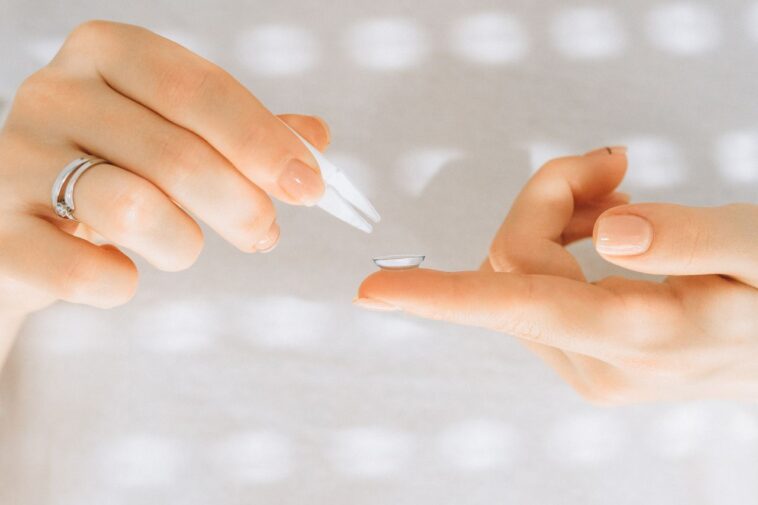
Have you ever tried using your eyeglasses prescription to buy contact lenses online, only to find yourself confused by a series of extra numbers, symbols, and unfamiliar terms?
You are not alone. Millions of people who wear glasses assume that vision is vision, so one prescription should easily work for both. It feels logical. After all, if a specific lens power helps you see clearly through your frames, shouldn’t that exact same power work when placed directly on your eye?
Unfortunately, using a glasses prescription to purchase contact lenses can cause blurry vision, severe eye strain, head pain, and even long-term discomfort.
The short answer is no, a prescription for glasses is not the same as a prescription for contacts. They are two completely different optical measurements designed for two entirely different devices.
In this comprehensive guide, we will break down why these prescriptions differ, how eye doctors calculate each one, the hidden measurements required for contact lenses, the potential risks of mixing them up, and how you can transition safely between frames and contacts.
The Foundational Physics: Distance Makes All the Difference
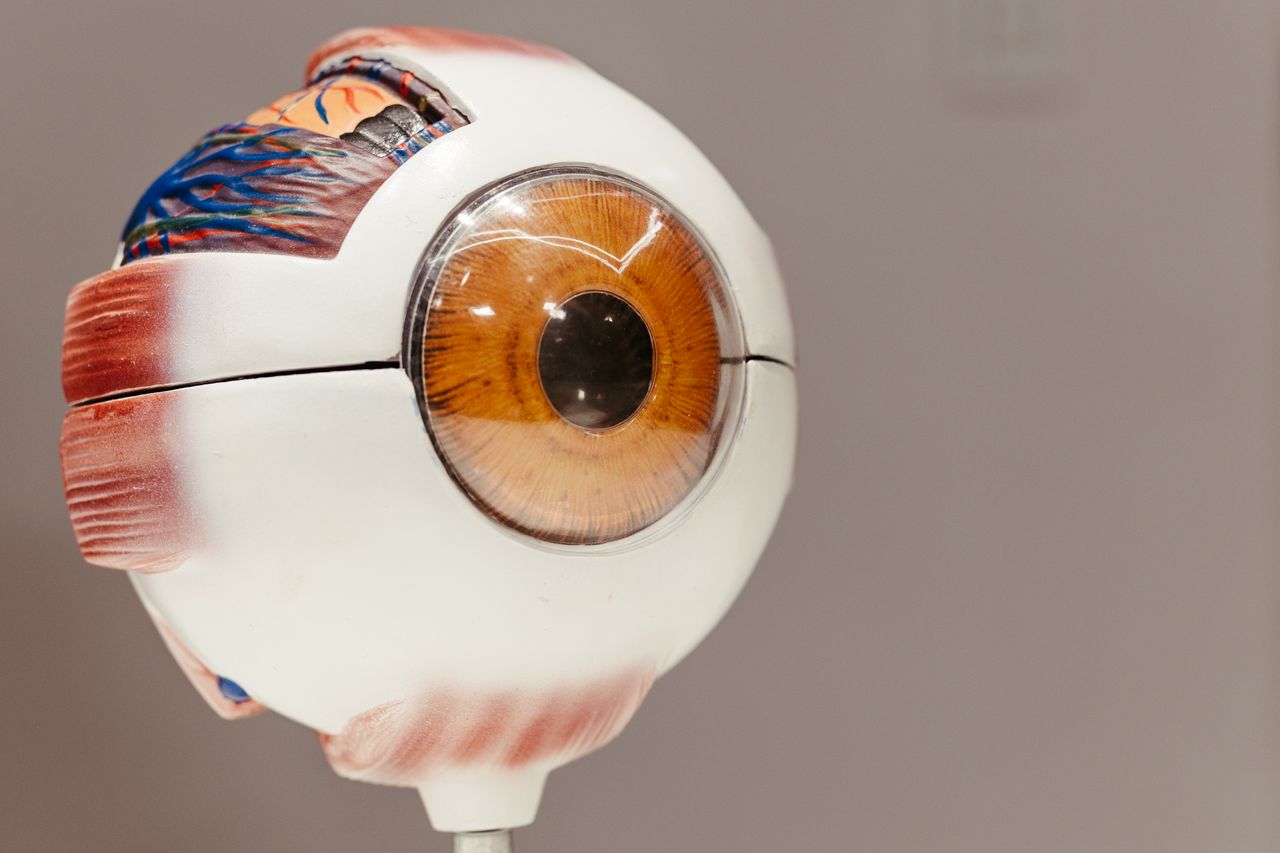
To understand why these two prescriptions are different, you first need to understand a basic principle of optics known as vertex distance.
Vertex distance is the space between the back surface of an optical lens and the front surface of your cornea (the clear front window of your eye).
Eyeglasses Vertex Distance
-
Eyeglass Lens → sits 12mm to 14mm away from the Cornea
Contact Lenses Vertex Distance
-
Contact Lens → rests directly on the Cornea (0mm Distance)
Why Eyeglass Lenses Sit at a Distance
When you wear eyeglasses, the corrective lenses sit roughly 12 to 14 millimeters away from your eyes, resting neatly on the bridge of your nose. Because the lens is placed at a physical distance from your eye, light rays bend through the air before hitting your cornea.
Why Contact Lenses Rest Direct on the Eye
A contact lens, on the other hand, rests directly on the film of tears covering your cornea. The vertex distance is zero.
Because the lens is touching your eye, the way light bends into your pupil changes completely.
-
For Nearsightedness (Myopia): When a lens moves closer to your eye, its effective strength increases. Therefore, a contact lens prescription for nearsightedness usually requires less power (a lower minus number) than an eyeglass prescription.
-
For Farsightedness (Hyperopia): When a lens moves closer to your eye, its effective strength decreases. Therefore, a contact lens prescription for farsightedness usually requires more power (a higher plus number) than an eyeglass prescription.
If you want to dive deeper into how your daily habits impact your physical well-being and optical health, taking time to learn how to create a healthy night routine can significantly reduce late-night screen strain and dry eye symptoms.
Anatomy of a Prescription: Glasses vs. Contacts
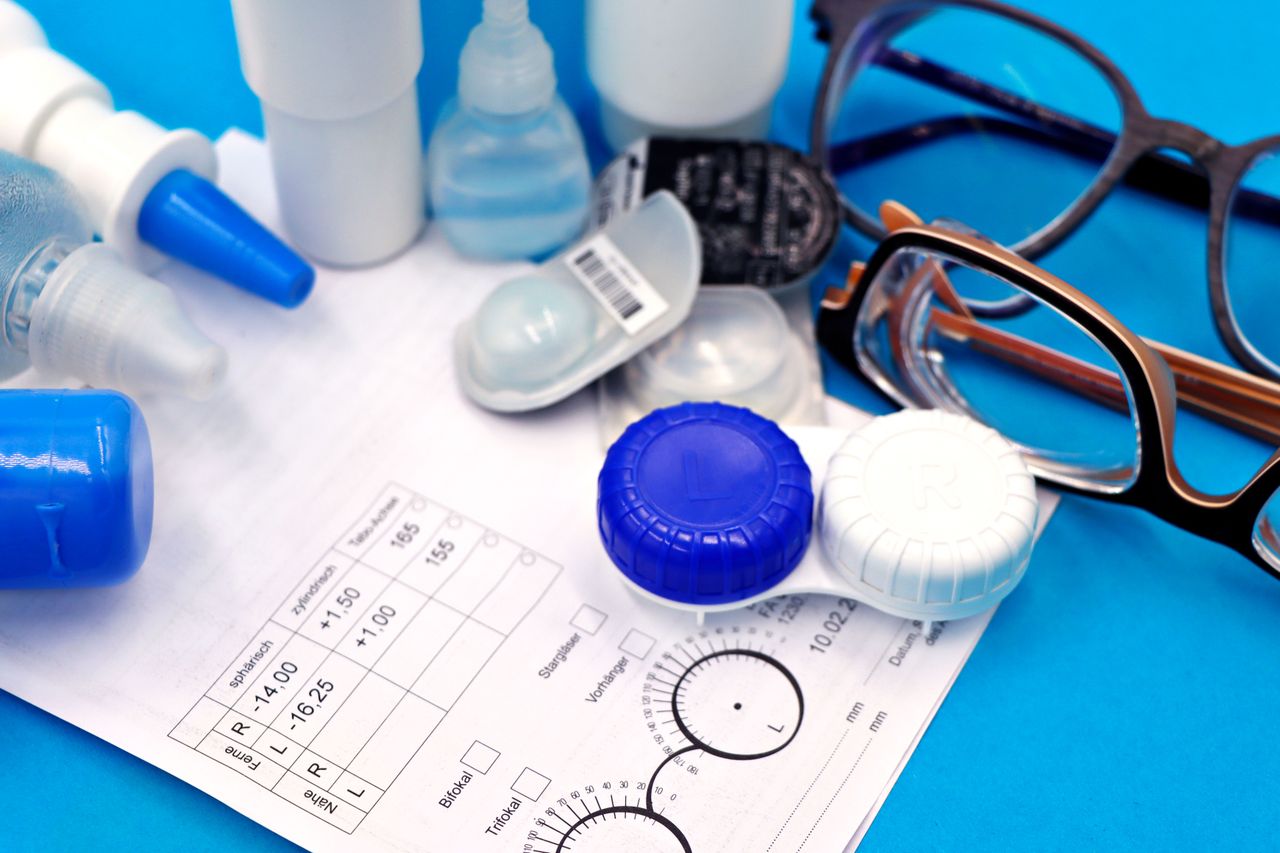
To see the differences clearly, let’s compare what you will actually find written on your official paper prescriptions.
| Measurement / Parameter | Eyeglasses Prescription | Contact Lens Prescription | What It Measures |
| SPH (Sphere) | Included | Included (Adjusted) | Lens power needed to correct nearsightedness or farsightedness. |
| CYL (Cylinder) | Included | Included (If Astigmatism present) | Lens power needed to correct unevenly shaped corneas. |
| AXIS | Included (1° to 180°) | Included (Rounded/Specific) | The orientation angle of the cylinder correction. |
| ADD (Addition) | Included (If Bifocal/Progressive) | Included (If Multifocal) | Extra magnifying power for reading or close work. |
| PD (Pupillary Distance) | Included | Not Included | The distance in millimeters between the centers of your pupils. |
| BC (Base Curve) | Not Included | Required | The curvature of the back surface of the contact lens. |
| DIA (Diameter) | Not Included | Required | The overall width of the contact lens from edge to edge. |
| Brand / Material | Not Included | Required | The specific lens brand, material, and moisture content approved. |
| Expiration Date | Usually 1 to 2 Years | Strictly 1 Year | The legal shelf life of the fitting specification. |
As you can see, a contact lens prescription contains specialized measurements, specifically Base Curve (BC), Diameter (DIA), and Brand Name, that simply do not exist on a glasses prescription.
Decoding the Unique Contact Lens Parameters
Let’s look closely at the extra parameters that make contact lens prescriptions unique.
1. Base Curve (BC)
Your eye is not a flat surface, nor is every eye shaped like a perfect sphere. The Base Curve measures the curvature of the back surface of the contact lens in millimeters (typically between 8.0 mm and 9.5 mm).
If the base curve is too steep (too small a number), the contact lens will hug your eye too tightly, cutting off oxygen and trapping debris. If the base curve is too flat (too large a number), the lens will slide around every time you blink, causing fluctuating vision and physical irritation.
2. Diameter (DIA)
The diameter is the overall size of the lens across its surface, usually ranging from 13.5 mm to 14.5 mm. This measurement ensures that the lens properly covers your cornea and stays centered over your pupil without catching on your eyelids.
3. Lens Material and Brand Specification
Unlike glasses frames—where you can put almost any prescription lens into almost any frame style, contact lenses are medical devices manufactured from specific hydrogel or silicone hydrogel materials. Each material allows a different amount of oxygen (measured as Dk/t) to reach your cornea.
Because of this, your optometrist must legally specify the exact brand, replacement schedule (daily, bi-weekly, or monthly), and material properties suitable for your specific eye tissue.
If you are trying to understand whether you can simply calculate these values yourself, read this detailed guide on how to convert a glasses prescription to a contact lens prescription to learn why mathematical formulas alone aren’t enough without a physical fitting.
Step-by-Step: How an Eye Exam for Contacts Differs from Glasses
If you have only ever had an exam for eyeglasses, you might be surprised to learn that a contact lens fitting requires extra diagnostic steps.
Contact Lens Fitting Process
Step 1: Standard Refraction
The optometrist uses a phoropter (the large machine with multiple lenses) to determine your baseline visual acuity. This gives them your standard glasses prescription numbers.
Step 2: Keratometry and Corneal Topography
The doctor measures the curvature of your clear front cornea using a digital mapping tool. This creates a detailed 3D map of your eye’s surface, helping them select the correct Base Curve and Diameter.
Step 3: Tear Film Evaluation
Because contacts rest directly on your tear layer, the doctor checks your tear quantity and quality. If you suffer from dry eyes, certain lens materials will be ruled out immediately.
Step 4: Trial Lens Fitting
You will be given a pair of temporary diagnostic trial lenses. You’ll wear them in the clinic office for 10 to 15 minutes to let your eyes adjust and allow the lenses to settle.
Step 5: Slit-Lamp Biomicroscope Inspection
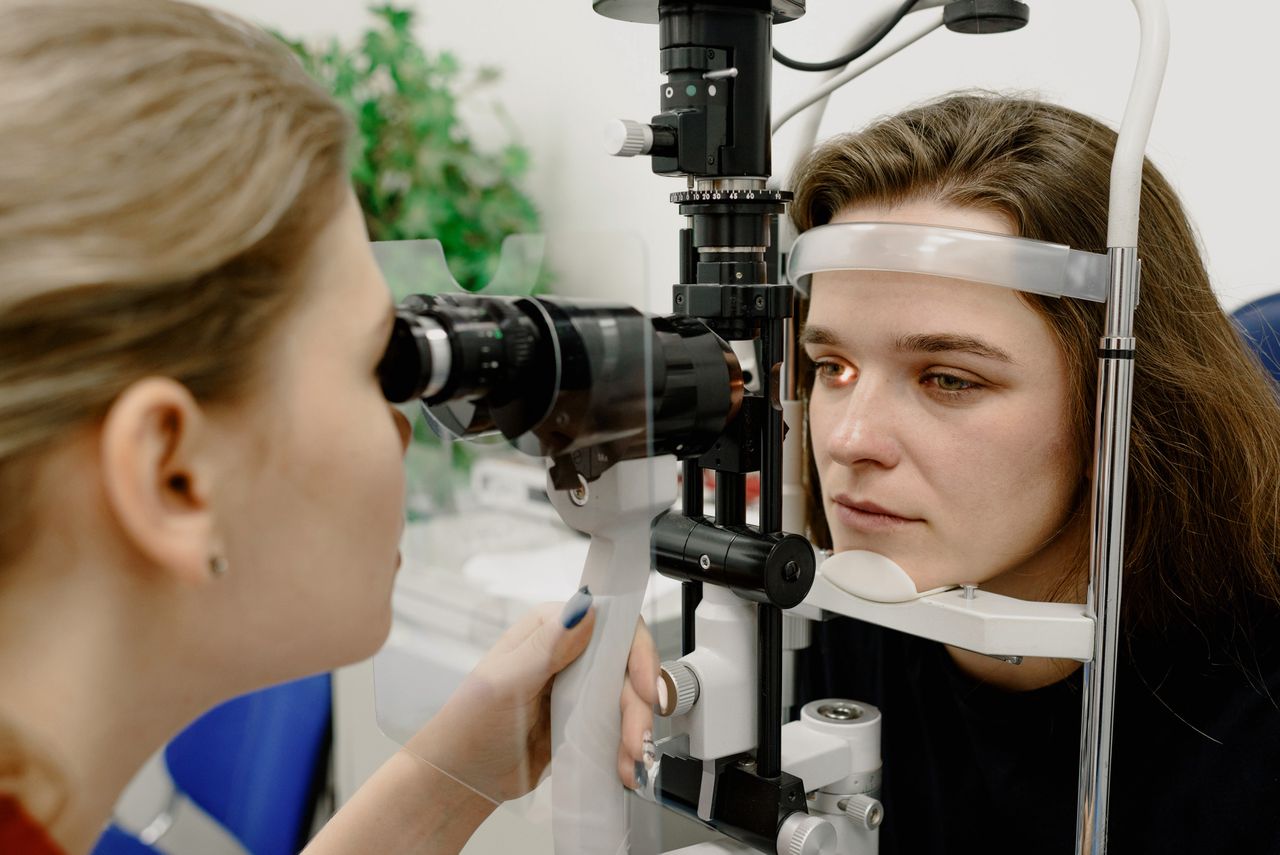
The doctor uses a high-powered microscope with a bright light strip to evaluate how the lens behaves when you blink. They check:
-
Movement: Does the lens move 1 to 2 millimeters comfortably with each blink?
-
Centration: Does the lens stay centered over the pupil when you look in different directions?
-
Rotation: For astigmatism (toric) lenses, does the axis line up properly without spinning out of place?
Step 6: Trial Period and Follow-up
You are typically sent home with the trial lenses to test them in your real-world environment, at work, while driving, and using computers, for one week. You then return for a quick follow-up to ensure your eyes remain healthy before your final prescription is signed.
Real-Life Example: Amna’s Prescriptions Compared
To make this completely crystal clear, let’s look at a real-world example. Here are the actual prescription sheets for a fictional patient named Amna, who has mild astigmatism and nearsightedness.
Amna’s Eyeglasses Prescription
-
Right Eye (OD): SPH -4.25 | CYL -1.25 | AXIS 180 | PD 63mm
-
Left Eye (OS): SPH -4.00 | CYL -0.75 | AXIS 175 | PD 63mm
Amna’s Contact Lens Prescription
-
Right Eye (OD): SPH -3.75 | CYL -0.75 | AXIS 180 | BC 8.6 | DIA 14.2 | Brand: Acuvue Oasys 1-Day
-
Left Eye (OS): SPH -3.75 | CYL Spherical Equivalent | BC 8.6 | DIA 14.2 | Brand: Acuvue Oasys 1-Day
Notice how Amna’s power dropped from -4.25 to -3.75 due to vertex distance. Notice also how her low cylinder correction in the left eye was converted into a spherical equivalent, eliminating the need for a complex astigmatism lens in that eye. This kind of adjustment can only be made safely by a trained eyecare professional.
Common Mistakes When Handling Eyewear Prescriptions
Transitioning between glasses and contacts often leads to small errors that can harm your eyes or waste your money. Here are the most frequent mistakes to avoid:
5 Risky Prescription Mistakes
-
Ordering contacts using your glasses prescription values: Skipping the contact lens fitting leads to improper lens power, poor fit, and visual discomfort.
-
Assuming all contact lens brands fit the same way: Different manufacturers use unique polymers, moisture levels, and designs, meaning the exact same size can feel totally different across brands.
-
Overlooking expiration dates on medical optical orders: Contact lens prescriptions expire after 1 year to ensure your eye tissue is checked regularly for oxygen deprivation and micro-damage.
-
Skipping the professional trial lens evaluation phase: Wearing unverified lenses in real-world environments increases the risk of eye strain, irritation, and undetected fit issues.
-
Misinterpreting OD (Right Eye) vs. OS (Left Eye) labels: Mixing up Oculus Dexter (OD / Right) and Oculus Sinister (OS / Left) on your order results in blurry, unbalanced vision.
1. Ordering Contacts Online with Eyeglass Numbers
This is the single most common mistake. Online optical retailers will often flag or reject orders if the uploaded prescription lacks Base Curve and Diameter values. Bypassing this by guessing numbers can leave you with lenses that cause severe irritation.
2. Assuming Lenses from Different Brands Fit Identically
Even if two different manufacturers produce lenses with an 8.6 Base Curve and a 14.2 Diameter, they may use entirely different polymers and water contents. One brand might feel comfortable all day, while another leaves your eyes red and dry by noon.
3. Ignoring Expiration Dates
Contacts sit directly on delicate living tissue. While eyeglasses prescriptions are often valid for up to two years, contact lens prescriptions strictly expire after one year in most jurisdictions.
This ensures your eye doctor checks your corneas regularly for microscopic blood vessel growth (neovascularization) or hypoxia (lack of oxygen).
Establishing solid life routines can help you keep track of recurring medical appointments. If you are working on self-improvement, discovering how to build healthy habits that last can make scheduling your annual eye checkups second nature.
Exploring Specialized Lenses: Toric, Multifocal, and Monovision
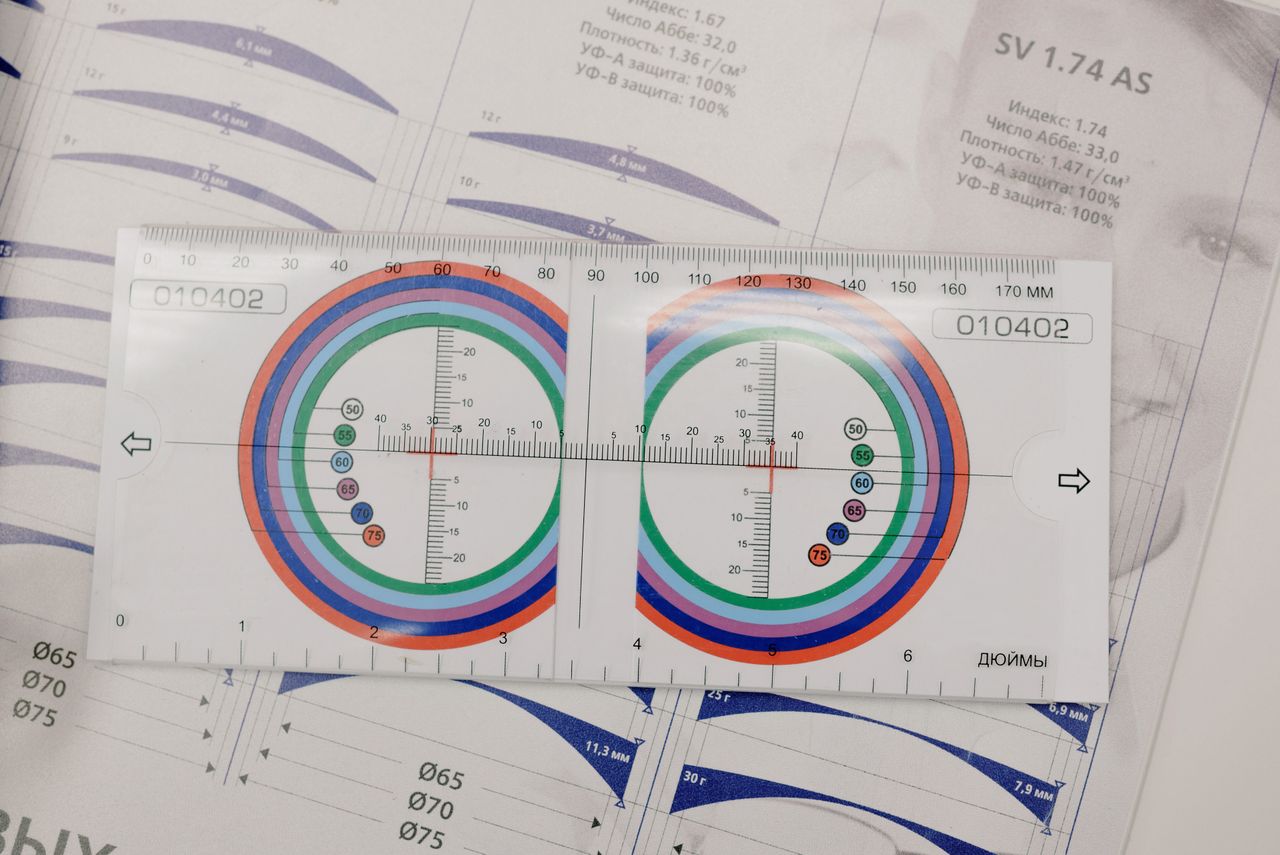
If your eyes require specialized optical correction, the distinction between your glasses prescription and contact lens prescription becomes even more dramatic.
Toric Lenses for Astigmatism
Astigmatism occurs when your cornea is shaped more like an American football than a round basketball.
-
In Glasses: The cylinder power is ground directly into the glass or resin lens at a precise angle. Because glasses frames stay fixed on your face, the lens orientation never shifts.
-
In Contacts: The contact lens floats on your tear film and rotates whenever you blink. Toric contact lenses are specially weighted at the bottom (ballasted) to keep the lens from spinning out of alignment.
Multifocal and Progressive Lenses
If you are over 40 and experience presbyopia (difficulty reading small print up close), you might wear progressive or bifocal glasses.
-
In Glasses: You physically tilt your head or move your eyes downward to look through the bottom “reading” portion of the lens.
-
In Contacts: Multifocal contact lenses use concentric rings of alternating near and distance power across the center of the lens. Your brain automatically learns to select the focused image it needs while ignoring the secondary out-of-focus image.
Monovision Solutions
For some patients, doctors prescribe monovision: fitting one eye with a contact lens tuned for distance vision and the other eye with a contact lens tuned for close-up reading. This approach is almost never used in standard eyeglasses because it would cause spatial disorientation.
When to Seek Professional Eyecare Help
Eye health is subtle. Microscopic changes to your corneal tissue can occur without immediate pain. You should always reach out to an optometrist or ophthalmologist if you experience any of the following symptoms:
-
Persistent eye redness, swelling, or unusual discharge
-
Sharp or dull aching pain in or around your eyes
-
Blurry or double vision that doesn’t clear up after blinking
-
Extreme light sensitivity (photophobia)
-
Feeling like a foreign object is trapped under your eyelid
At WillingToDo, our goal is to provide clear, actionable knowledge so you can make informed choices about your daily health and wellness. Never hesitate to consult a licensed optical specialist whenever you feel unsure about your vision care.
The Future of Optical Correction: What Lies Ahead
Optical technology is advancing rapidly. The distinction between glasses and contacts will expand even further over the coming decade as smart technologies arrive.
Emerging Eyecare Innovations
-
Smart Contact Lenses with Integrated Micro-Displays: High-tech lenses embedded with micro-electronics that project visual notifications, navigation cues, or augmented reality displays directly into your field of view.
-
Microfluidic Auto-Focusing Eyeglass Lenses: Dynamic optical lenses that automatically adjust their focal length based on liquid movement or eye tracking, offering seamless clarity across all distances.
-
Myopia Management Lenses for Children (Orthokeratology): Specialized overnight rigid lenses (Ortho-K) or multi-zone soft lenses designed to gently reshape the cornea and slow down nearsightedness progression in young eyes.
-
Tear-Film Diagnostic Sensors in Daily Lenses: Microscopic biosensors built into disposable lenses that continuously monitor intraocular pressure for glaucoma tracking or measure glucose levels and tear moisture in real time.
Researchers are already testing contact lenses equipped with microfluidic chambers that automatically adjust focus based on where you are looking. Others are developing smart lenses capable of monitoring glucose levels in tears or measuring intraocular pressure for early detection of glaucoma.
As these technologies develop, precise, customized contact lens fittings will become even more vital for maintaining vision health.
Conclusion and Next Steps
To protect your eyes and enjoy clear vision, keep these core principles in mind:
-
Never interchange prescriptions: Your glasses prescription cannot be used to purchase contact lenses, and vice versa.
-
Respect the extra measurements: Base Curve, Diameter, and Material Brand are essential for safety and comfort.
-
Get fitted by a professional: Only an eye doctor can evaluate how a lens rests on your corneal surface.
-
Schedule annual checkups: Keep your prescriptions updated to protect your long-term eye health.
If you currently rely solely on eyeglasses and want to try contact lenses, your next step is simple: contact your local eyecare provider and request a dedicated Contact Lens Exam and Fitting.
Frequently Asked Questions
Can I mathematically calculate my contact lens prescription from my glasses prescription?
No. While mathematical formulas exist to estimate vertex distance power changes for high prescriptions, a formula cannot tell you your eye’s Base Curve, Corneal Diameter, or tear film quality. A physical fitting with diagnostic lenses is legally and clinically required.
Why are contact lens prescriptions more expensive than glasses exams?
A contact lens exam requires additional diagnostic testing, including corneal curvature mapping, tear film evaluation, insertion/removal training for new wearers, trial lenses, and follow-up care.
Can I wear contact lenses if I have astigmatism?
Yes! Modern toric contact lenses are available in daily, bi-weekly, and monthly disposable materials. They are specifically engineered to remain stable on your eye to correct astigmatism effectively.
What happens if I wear contacts with the wrong Base Curve?
If the Base Curve is too tight, it can restrict oxygen flow to your cornea, leading to corneal ulcers, swelling, and severe pain. If it is too loose, the lens will slip constantly, causing blurry vision and physical discomfort.
How long is a contact lens prescription valid?
In most regions, contact lens prescriptions are legally valid for one year from the date of your exam. This ensures your doctor can inspect your cornea annually for any signs of oxygen deprivation or tissue stress.
Why does my pupil distance (PD) appear on my glasses prescription but not on my contacts prescription?
Pupillary Distance (PD) measures where the optical center of an eyeglass lens should align relative to your nose. Because contact lenses rest directly over the center of your eye and move with your eye movement, a PD measurement is unnecessary.