 Harriet Wetton
Riding an electric bike up a steep hill while pedaling with all your strength can feel frustrating. You hear the motor straining, your speed drops, and your legs burn. You might wonder why your expensive e-bike feels like it is working against you when you need help the most.
Many riders experience this exact disappointment. Standard single-motor e-bikes are great for flat city streets, but they often struggle when faced with heavy loads, loose gravel, mud, or mountain inclines.
This guide will clear up all the confusion around the dual motor e-bike. You will learn how two motors work together, why all-wheel drive changes your ride, and how to decide if this powerful setup matches your daily riding needs.
What Is a Dual Motor E-Bike?
A dual motor e-bike is an electric bicycle equipped with two separate electric motors. Instead of relying on just one motor placed in the rear wheel, front wheel, or center frame, a dual motor bike places an independent hub motor in both the front and rear wheels.
Having two motors gives the bike all-wheel drive capabilities. Just like an all-wheel drive car or truck, power goes to both tires at the same time. This simple change dramatically improves how the bike handles different terrains, distributes weight, and manages steep climbs.
Why Dual Motor Power Matters
Single-motor bikes push or pull you from one end. A front-hub motor pulls the front tire, which can feel loose on slippery turns. A rear-hub motor pushes you forward, which works well on pavement but can slip on wet grass, sand, or loose dirt.
When you put a motor in both wheels, power spreads out evenly across the entire frame. The front motor pulls you through corners while the rear motor pushes you forward. This balance creates incredible stability and eliminates traction loss on tough trails.
How Does a Dual Motor E-Bike Work?
Understanding how these bikes function makes it easy to see why they perform so differently from standard e-bikes. Dual motor systems combine electrical components, controllers, and smart power distribution to deliver smooth performance.
1. The Power Source and Batteries
Both motors pull electricity from the bike’s battery setup. High-power dual motor bikes often use large single batteries or dual battery systems. Having two batteries ensures that powering two motors does not drain your range within a few miles.
2. Dual Motor Controllers
The controller is the brain of the bike. In a dual motor setup, the controller regulates how much energy goes to each wheel. Advanced systems allow you to switch modes on the display screen. You can choose to run:
-
Single Motor Mode: Only the rear motor operates to save battery power on flat roads.
-
Dual Motor Mode: Both motors work together for full power, high speed, and maximum climb capability.
3. All-Wheel Drive Traction Controls
When you accelerate, electricity flows instantly to both hubs. If the rear tire starts to spin out on gravel, the front tire continues pulling you forward. This active balance stops you from losing momentum on steep ascents or soft soil.
Single Motor vs. Dual Motor E-Bikes: A Clear Comparison
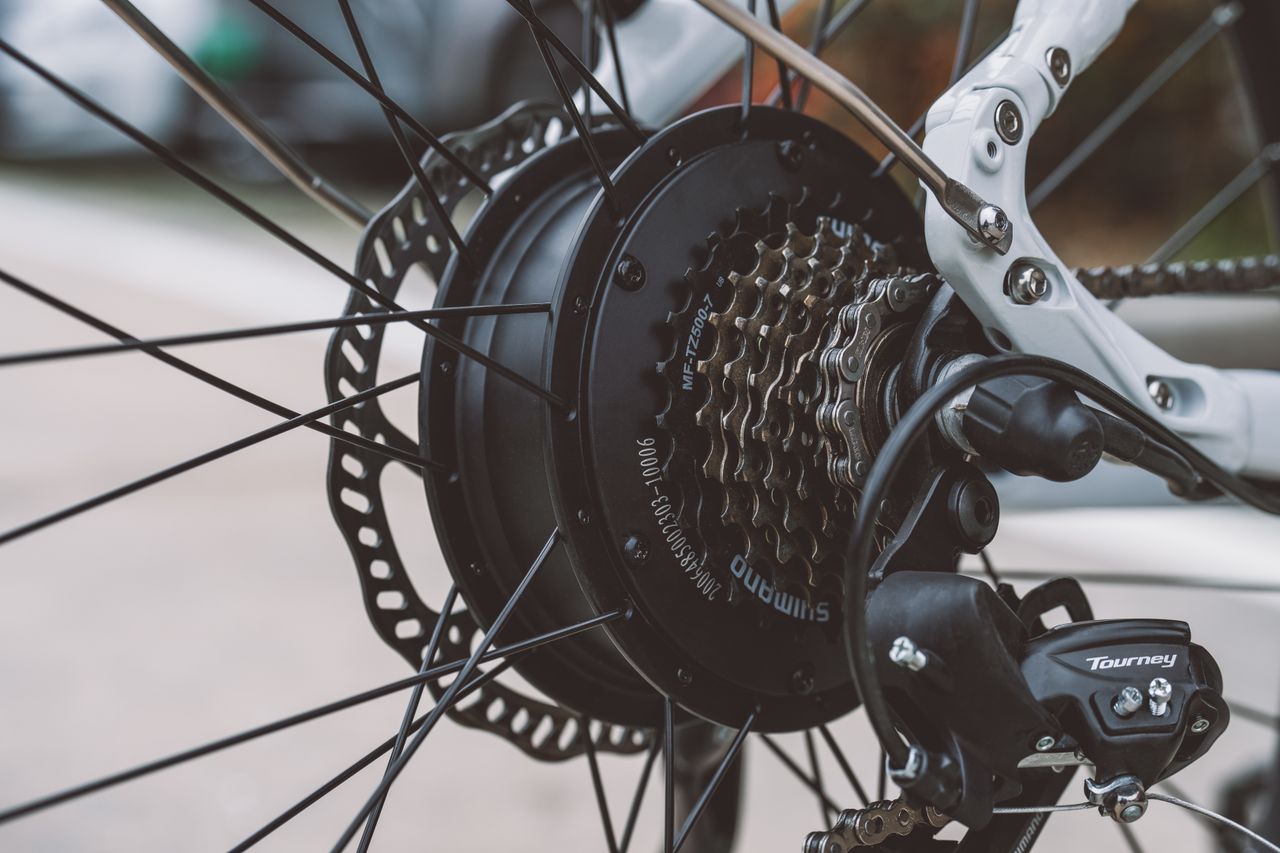
Choosing between a single motor and a dual motor setup depends on where and how you ride. Here is how they stack up side by side.
| Feature | Single Motor E-Bike | Dual Motor E-Bike |
| Traction & Grip | Moderate (Slippery on sand/mud) | Exceptional (All-wheel drive grip) |
| Hill Climbing Ability | Struggles on very steep inclines | Climbs steep hills without losing speed |
| Weight Capacity | Standard (200 lbs to 300 lbs) | Heavy-Duty (Up to 400 lbs or more) |
| Overall Bike Weight | Lighter (40 lbs to 65 lbs) | Heavier (70 lbs to 100+ lbs) |
| Battery Consumption | Standard battery drain | Higher battery consumption in dual mode |
| Initial Cost | Budget to Mid-range | Higher overall investment |
Step-by-Step Guide: How to Ride and Manage a Dual Motor E-Bike
Operating a bike with dual motors requires a bit of technique to ensure safety and extend your battery life.
Select Riding Mode ➔ Smooth Throttle/Pedal Start ➔ Adjust Power on Hills ➔ Manage Battery Usage
Step 1: Choose Your Motor Mode Before Riding
Before hitting the throttle or pedaling, check your handlebar display controls. If you are cruising on smooth, flat city pavement, turn on single-motor mode. Use dual-motor mode only when preparing for hills, off-road terrain, or heavy cargo hauling.
Step 2: Engage Power Smoothly
Dual motors deliver instant torque. If you pull the throttle all the way back while standing still, the bike can jump forward faster than expected. Always start moving gently, allowing both wheels to catch grip before applying full power.
Step 3: Shift Gears and Power Levels on Inclines
When approaching a steep hill, switch to dual-motor mode early. Keep your mechanical gears in a lower setting so your legs can keep spinning comfortably alongside the electric assistance.
Step 4: Monitor Battery Levels Closely
Running two motors at maximum assistance continuously uses twice as much energy. Watch your battery display closely during dual-motor operations so you do not run out of power far away from home.
A Real-Life Example: Conquering the Daily Commute and Weekend Trails
Consider Mark, an avid cyclist who commutes ten miles every day carrying a heavy backpack with work gear. His daily route includes a steep hill with a 15% grade, followed by a stretch of wet, unpaved gravel paths near a public park.
On his old single-motor e-bike, Mark regularly ran into issues:
-
The bike slowed down to a crawl halfway up the steep hill.
-
The rear tire often spun out out on wet gravel, forcing him to dismount and push the bike.
-
The motor overheated on hot afternoon rides due to constant high strain.
After switching to a dual motor e-bike, Mark experienced an instant difference:
-
Smooth Climbing: With both motors running, his bike climbed the 15% hill effortlessly without dropping speed.
-
Solid Grip: The front wheel pulled him safely through the wet gravel paths without sliding.
-
Less Strain: Because two motors shared the workload, neither motor overheated, making his daily ride smooth and stress-free.
Common Mistakes to Avoid with Dual Motor E-Bikes
Owning a powerful all-wheel drive e-bike comes with responsibilities. Avoiding these frequent mistakes will keep you safe and prolong your bike’s lifespan.
-
Running Dual Motor Mode All the Time: Leaving both motors engaged on flat, paved paths burns through battery power fast without giving any real performance benefit. Switch to single-motor mode whenever extra power is not needed.
-
Slamming the Throttle in Sharp Turns: Because the front wheel has a motor, applying heavy throttle during a tight turn can cause the front tire to spin and pull out from under you. Always feather the throttle gently in turns.
-
Ignoring Tire Pressure: Dual motor bikes are heavier and produce higher speeds. Riding on underinflated tires increases the risk of flats and reduces your overall range. Check tire pressure weekly.
-
Skipping Brake Maintenance: Heavy bikes with two motors need strong stopping power. Check your brake pads frequently and adjust mechanical or hydraulic disc systems regularly.
-
Neglecting Battery Care: Never store your e-bike battery completely empty or leave it plugged into a charger for days after reaching full capacity.
Advanced Strategies: Maximizing Range and Motor Lifespan
If you want to get the most miles out of your dual motor setup, follow these practical strategies used by veteran riders.
Master the Alternating Motor Technique
Some dual motor e-bikes allow you to switch between the front and rear motors individually. On long, flat journeys, alternate between using the front motor and the rear motor every few miles. This keeps both motors cool and distributes wear evenly over time.
Optimize Your Tire Selection for Terrain
If you spend most of your time on pavement with occasional dirt trails, choose semi-slick fat tires with a smooth center tread and knobby side grips. This design cuts rolling resistance on roads while keeping traction active in dirt corners.
For total off-road freedom, high-knobby tires provide maximum control. You can explore versatile designs like the Wire Freedom E-Bike to see how robust framing pairs with powerful terrain tires.
Balance Your Cargo Weight
Because dual motor bikes carry heavier loads, ensure you split weight evenly between front and rear racks. Putting all your cargo over the rear tire makes the front wheel light, reducing the traction benefit of your front motor.
Exploring Related E-Bike Subtopics
Choosing an electric bike involves exploring several related areas to ensure you select the absolute best setup for your lifestyle.
Frame Geometry and Build Quality
A dual motor setup adds weight to the wheel hubs. Because of this added stress, frame construction matters deeply. Durable aluminum alloys or reinforced steel frames ensure the bike handles heavy vibration without structural failure.
Models designed like the Vetra E-Bike highlight how clean engineering and solid frames accommodate higher power output without sacrificing stability.
Indoor Training for Outdoor Stamina
Riding an e-bike, especially on challenging terrain, still engages your core, legs, and balance muscles. Many riders keep up their cardio fitness during winter months by using indoor cycles.
Learning about option setups through guides on the 5 best spin bikes helps riders maintain stamina so off-road e-bike handling feels effortless year-round.
Battery Chemistries and Dual-Pack Setups
Understanding watt-hours, battery voltage, and dual-battery wiring prevents range anxiety. Dual motor systems usually demand at least 48V or 52V battery setups to maintain stable speed under load.
When to Seek Professional Expert Help
While basic e-bike maintenance like fixing a flat or lubricating a chain is easy to do at home, dual motor systems carry complex electrical setups. Seek help from a certified electric bike technician when:
-
Electrical Errors Appear: If your LCD screen displays error codes related to the controller or throttle, let a professional diagnose the wiring harness.
-
Hub Motor Noise Occurs: Grinding or clicking noises coming from inside the wheel hub indicate worn internal planetary gears that need expert repair.
-
Brake Upgrades are Needed: If you are upgrading from mechanical disc brakes to hydraulic disc brakes to handle higher speeds, professional installation guarantees proper hose bleeding and stopping power.
Future Trends in Dual Motor E-Bike Technology
Electric mobility continues to evolve rapidly. Here are several exciting shifts happening right now in the dual motor space:
-
Smart Traction Control Systems: Future e-bikes will use sensors to automatically measure tire slip, adjusting power between front and rear motors in milliseconds without requiring manual switching.
-
Lighter Motor Enclosures: Advancements in motor materials are cutting hub motor weight by up to 30%, making dual motor bikes much easier to lift and transport.
-
Integrated Solar and Regenerative Braking: Newer designs are testing regenerative braking technology across both hubs, recapturing energy back into the battery during downhill descents.
Summary and Next Steps
A dual motor e-bike transforms how you conquer steep hills, rough gravel, mud, and heavy cargo. By delivering true all-wheel drive power across both wheels, these bikes eliminate traction loss and provide smooth, confident rides where single-motor bikes struggle.
To pick the right path forward:
-
Assess your daily route to see if steep inclines or loose terrain demand all-wheel traction.
-
Consider your strength and storage space to ensure you can handle a heavier bike frame.
-
Test ride single and dual motor options to feel the immediate difference in torque and acceleration.
Frequently Asked Questions
Are dual motor e-bikes legal to ride on public trails?
E-bike laws vary by city, state, and country. In many areas, e-bikes restricted to standard speeds (like Class 1, Class 2, or Class 3 limits) are permitted on public paths. Always check local trail rules regarding motor wattage limits before riding.
How fast can a dual motor e-bike go?
Speed depends on motor wattage, battery voltage, and local speed governor settings. While many dual motor bikes can reach speeds above 28 mph on private land, most come factory-limited to comply with local street safety regulations.
Does a dual motor e-bike drain the battery twice as fast?
When operating both motors at maximum power, battery consumption is higher than single-motor use. However, because two motors share the workload, they work less hard individually on steep hills, which helps balance energy efficiency.
Can I ride a dual motor e-bike if the battery dies?
Yes, you can still pedal a dual motor e-bike if the battery drains completely. However, because dual motor bikes are heavier and produce magnetic drag from the hubs, pedaling without motor assistance requires extra physical effort.
Is a dual motor bike good for heavy riders or carrying cargo?
Yes, dual motor e-bikes are ideal for heavier riders and cargo hauling. The combined torque from two motors provides strong acceleration and hill climbing capability without straining a single motor system.